

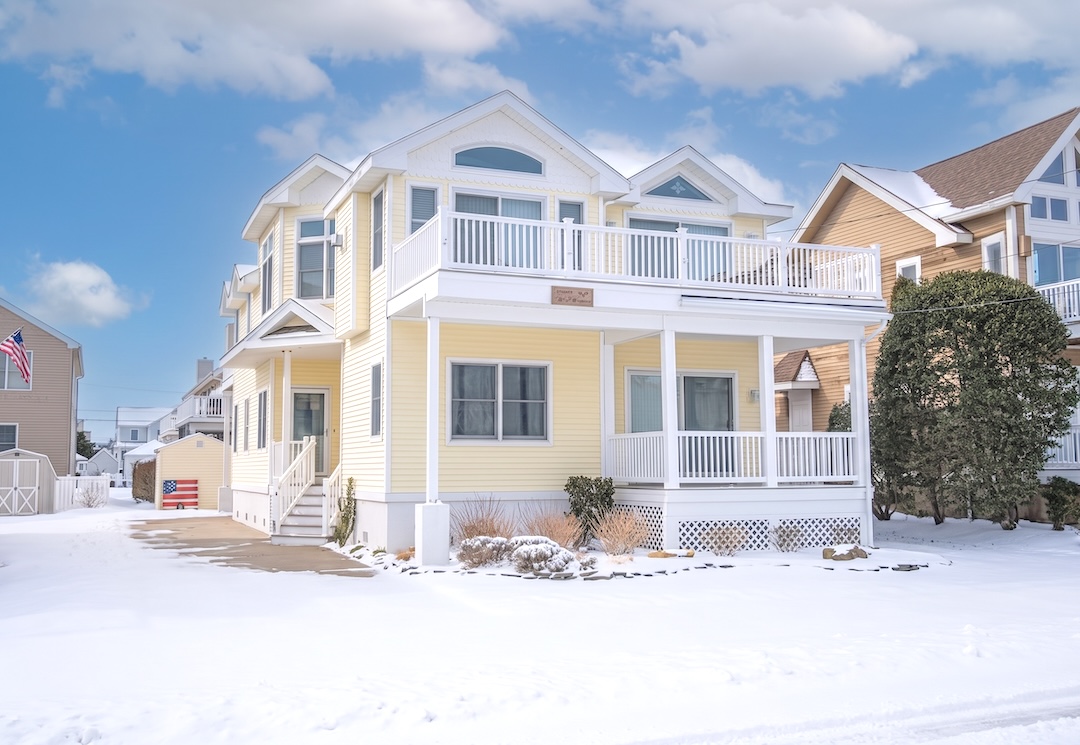
We all hate to say goodbye to another wonderful season at the Jersey Shore. After months of beach days, family gatherings and time spent enjoying our favorite coastal communities, heading home and returning to the day-to-day routine can be a tough transition.
One of the most important parts of closing up your Jersey Shore home for the season is making sure it is properly prepared for the winter months. Weather along the coast can be unpredictable, and Cape May County has experienced everything from mild winters with only a light dusting of snow to freezing temperatures, ice storms and powerful coastal winds.
Before you head home for the season, here are a few things to consider when winterizing your shore home.
Water & Plumbing
One of the biggest decisions homeowners face is whether to shut off the water and winterize the plumbing system or leave the water on with the heat running.
Option 1: Turn Off the Water and Drain the Plumbing
Pros:
- No heating bill for an unoccupied home.
- Properly drained pipes are less likely to freeze and burst.
- Reduces the risk of plumbing leaks while the home is vacant.
Cons:
- Many homeowners hire a licensed plumber to shut off the water and properly drain or blow out the plumbing system.
- If you want to use the home during the winter, the plumbing system will need to be restored before the home can be used normally.
Option 2: Leave the Water On and Keep the Heat Running
Many homeowners choose to keep their heat set around 55–60 degrees throughout the winter.
Pros:
- Your home is ready to use if you decide to visit during the winter.
- Maintaining a consistent temperature can help control moisture and reduce the potential for dampness, mold and mildew.
Cons:
- You will have heating costs for an unoccupied home.
- An extended power outage or heating-system failure could allow the temperature inside the home to drop significantly, potentially resulting in frozen pipes and water damage.
A Few Winterizing Suggestions
If you plan to leave the heat on, there are several simple steps that can provide additional protection:
- Open cabinet doors beneath sinks in kitchens, bathrooms and wet bars to allow warm air to circulate around plumbing, particularly during periods of extremely cold weather.
- Install a smart thermostat that allows you to monitor and adjust your home's temperature remotely. Many systems can also send a low-temperature alert directly to your phone.
- Turn off the water supply to your washing machine to help protect against hose failures or valve leaks while the home is unoccupied.
- Disconnect outdoor hoses and shut off water to exterior spigots to help prevent freezing and damage to exterior plumbing.
- Clean gutters and downspouts before leaving for the season so water can drain properly during winter storms.
- Check doors and windows to make sure they are properly sealed and locked to help prevent drafts and moisture intrusion.
- Have someone periodically check the property throughout the winter, particularly after major storms or extended periods of freezing temperatures.
At Tim Kerr Sotheby’s International Realty, we understand that your Jersey Shore home is more than a place to enjoy with family and friends, it is also an important investment. Taking the time to properly prepare your home for the winter months is a smart and responsible way to help protect that investment and ensure it is ready to enjoy when you return next season.
Before You Close the Door for the Season
Every Jersey Shore home is different, and the best winterization plan depends on the home's plumbing, heating system, age and construction. When in doubt, consult a licensed plumber or HVAC professional to determine the best approach for your property.
Whether your shore home is in Avalon, Stone Harbor, Sea Isle City, Cape May or the nearby Cape May County communities, taking a little time to prepare your property before winter can help protect your investment.
